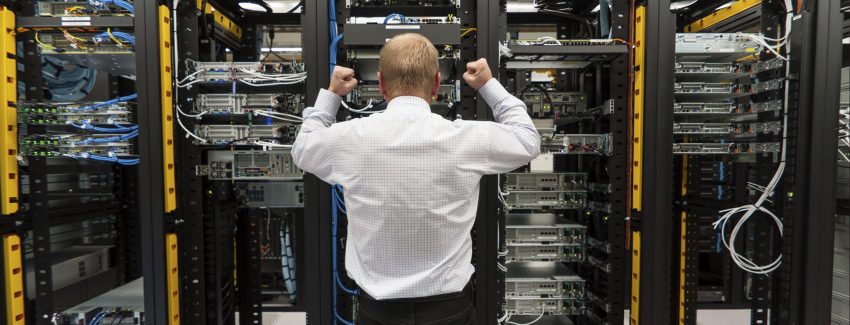
Why You Need a Data Center Disaster Recovery Plan

Many businesses have no data center recovery plan and they do not have any inclination of getting one. They neglect the possibility that something bad may happen to the information stored in their computer. Most companies also feel that there is only a mere chance that they will experience any problems with their files while others think that the soft data they have is not that important to pay much attention to. They believe that it will only be an added expense and do not want to invest in it. However, there are a handful of reasons why you need to develop a data center disaster recovery plan. Read on and find out why you should apply it to your business.

Documentation Purposes – There are a lot of systems that allows you to better organize and arrange your data easily. It is very important especially if you need to trace the original files and programs that have been erased or misplaced due to human errors. You will be able to appreciate how your business will benefit by having your files stored and arranged accurately.

Peace of Mind – You will be able to assure your staff and your clients that their information is safe from any kind of catastrophe that may arise. They will have the peace of mind because they know that your company is prepared to handle any concerns that may come up and that you have a back-up plan in place. You can maintain your clients and attract more customers by telling them that it is your distinct advantage from other competitors.

Security – Viruses and worms can damage your data and affect your files. When your information gets corrupted, it will definitely have an effect on your business. If you have a back up system, it can easily be fixed and you will be able to restore your files immediately. Your company will be back to its normal operations in no time as if nothing happened.

Efficiency – You will be able to work effectively if your damaged files have been immediately restored by computer backup systems. It will not impede your business since you were able to address the problem quickly. Data center discovery disaster plans can not only handle big issues but it can deal with minor issues as well.

Save Money – Most people think that it will be costly to invest in a data center disaster recovery plan but the truth is it can save you a lot of money. If you think long term, you will have a lot of savings because your recovery plan will be able to prevent and solve your concerns.

Major Disaster – In case any problems arise that will cause your data to be damaged, you will feel relieved knowing that you have online computer backups that can bring back or retrieve all your important data. For those that do not have any recovery plan, they will be deeply troubled because they have no way of getting their important files again.

Getting a Web Hosting Provider

There are a lot of web hosting plans and providers available in the internet. But if you want to know a good web hosting provider, there are specific criteria that you have to pay attention to that includes bandwidth, security, customer service, upload and download speeds, disk space etc. You will find below a detailed explanation for each criteria.

1. Upload and Download Speeds – If the pages in your website take longer to load, then you should change your web hosting provider. Computer users easily lose interest when they have to wait for a long time just to be able to view a site. You should verify with the web hosting provider their upload and download speed and how they are able to maintain it. The speed in loading pages is very important and can make or break your business.

2. Disk Space and Bandwidth – Disk space is the space allowed by your web hosting provider for all the files in your website while bandwidth is the amount of data transfer permitted in a specified period. If you have a lot of disk space, it will allow you to further enhance your site since you have a lot of space to save your files like images, HTML, etc. On the other hand, bandwidth identifies the traffic that you can accommodate. Check how much space and bandwidth you website require in order to maximize results without having to spend much.

3. Customer Service – Find out the customer service that they offer in case you require their assistance. You need to know if their service is free or not and if they can provide 24 hour support. Having a reliable customer service will help you in case you encounter problems in your website.

4. Security – The servers of web hosting providers are housed in a building called a data center. It has to be completely secure and monitored 24/7 by trained security. There are also different measures implemented by these providers such as backup power sources, fuel supplies, smoke and fire detection and environmental controls to keep the equipment functioning properly.

5. Guarantee – Some web hosting providers offer free trials so that the potential customers can be able to avail of their services and find out if it will work for them. There are also other providers who offer uptime guarantee which means the percentage of time that your site will be guaranteed live when a visitor checks your site. The uptime guarantee usually ranges from 99.95% to 99.99%.

6. Testimonials – Find out testimonies of customers who have availed the services of the web hosting provider. You need to weigh in the positive and negative reactions in order assess if the web hosting provider will be good for you and your business.

7. Upgrade and Downgrade – Make sure that you do not sign any contract that have lock in periods because if you encounter problems, you will have difficulty in downgrading or you will have to pay a certain amount just to get out of the plan. There are web hosting providers that will allow you to change plans whenever you want to at no extra cost.